 EN
 ZH
 PT
 DE
 ES
 FR
 IT
 RU
 JA
 KO

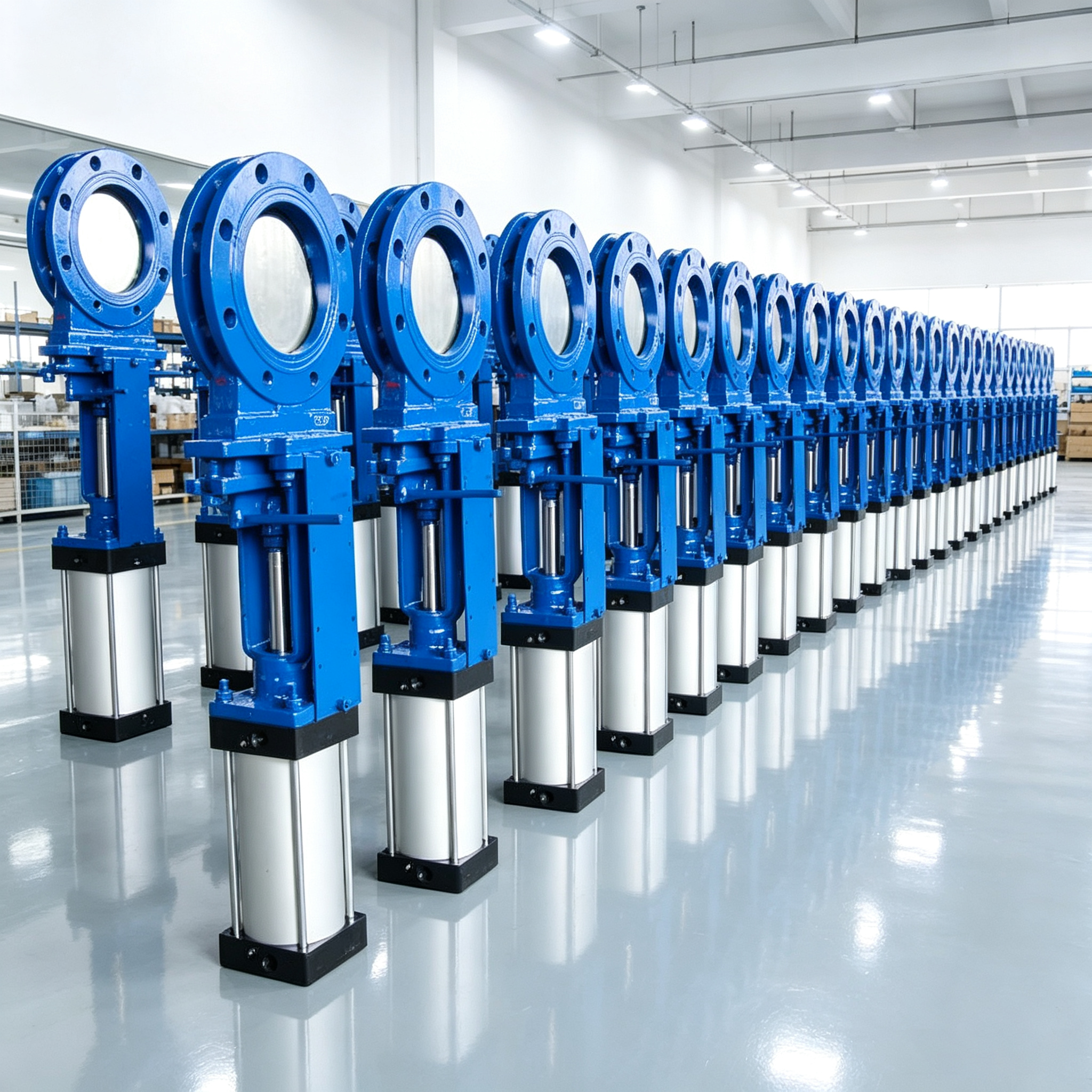
Knife Gate Valve Types, Applications & Selection Guide | SHIELD
Learn about knife gate valve types, industrial applications, materials, sealing options and selection criteria for wastewater, mining, slurry and pulp processing.
1. What Is a Knife Gate Valve?
A knife gate valve is an industrial isolation valve designed primarily for handling liquids containing suspended solids, slurry, sludge, fibers and other challenging media.
It uses a vertically moving gate with a sharpened lower edge to cut through or displace material during closing. Compared with conventional gate valves, knife gate valves are often better suited to applications where solids accumulation and clogging are concerns.
Common applications include wastewater treatment, mining, pulp and paper, chemical processing and power generation.
Selecting the right knife gate valve depends on the medium, pressure, temperature, solids content, flow direction and required sealing performance.
2. Main Types of Knife Gate Valves
Unidirectional Knife Gate Valves
Designed primarily to seal against pressure from a specified direction. They are suitable for applications with predictable flow direction, provided installation follows the manufacturer’s requirements.
Bidirectional Knife Gate Valves
Engineered to provide shutoff from either direction within their specified operating limits. They are useful in pipelines where flow direction may change.
Resilient-Seated Knife Gate Valves
These valves use elastomeric seats, such as EPDM or NBR, to achieve tight shutoff under suitable conditions. They are commonly considered for wastewater, sludge and compatible industrial liquids.
Metal-Seated Knife Gate Valves
Metal-to-metal sealing designs may be suitable for certain abrasive or high-temperature applications. Their leakage performance depends on the design and specified acceptance criteria.
Slurry Knife Gate Valves
Designed for challenging solid-liquid mixtures, these valves may incorporate wear-resistant components, specialized seats or replaceable liners to address abrasive wear.
Knife gate valves are available with manual, gear, pneumatic, electric or hydraulic actuation, depending on operating requirements and automation needs.
3. Where Are Knife Gate Valves Used?
| Industry | Typical applications |
|---|---|
| Wastewater treatment | Sewage, sludge and solids-bearing wastewater |
| Mining | Mineral slurry and tailings |
| Pulp and paper | Pulp stock and fibrous process streams |
| Chemical processing | Compatible corrosive and solids-bearing media |
| Power generation | Selected ash-handling and process systems |
Each application requires a different balance of corrosion resistance, abrasion resistance, sealing performance and maintenance requirements.
For abrasive slurry, wear-resistant components may be important. For wastewater, corrosion resistance and reliable shutoff often take priority. For fibrous media, gate geometry and resistance to material accumulation should be carefully evaluated.
4. How to Choose the Right Knife Gate Valve
Before purchasing a knife gate valve, consider these six factors:
- Medium: Identify the liquid, slurry or solids being handled, including particle size, concentration and chemical composition.
- Pressure and temperature: Confirm operating pressure, differential pressure and temperature limits.
- Sealing requirements: Determine whether unidirectional or bidirectional sealing is needed and specify acceptable leakage.
- Materials: Select suitable body, gate, seat and packing materials based on corrosion, abrasion and chemical compatibility.
- Connection and installation: Verify valve size, flange standard, face-to-face dimensions and available installation space.
- Actuation: Choose manual or automated operation according to valve size, operating frequency and control requirements.
Relevant standards may include MSS SP-81, ANSI/AWWA C520, EN 558, ISO 5752 and applicable valve testing standards. Their suitability depends on the valve design, service and project specification. Always confirm the required standard and edition before ordering.
5. Common Customer Problems and Solutions
Problem: Frequent clogging
Solids and fibers may interfere with closure.
Solution: Select a suitable gate and body design based on the medium, installation orientation and solids-handling requirements.
Problem: Leakage after repeated operation
Seat wear, chemical incompatibility or incorrect operating conditions can reduce sealing performance.
Solution: Review the seat material, pressure direction, differential pressure and maintenance requirements.
Problem: Short service life in abrasive slurry
Hard particles can accelerate wear on the gate and sealing components.
Solution: Evaluate abrasion-resistant materials, replaceable wear parts and application-specific valve designs.
Problem: High maintenance costs
Low initial purchase prices may lead to higher long-term expenses if the valve requires frequent repairs.
Solution: Compare total lifecycle costs, including installation, spare parts, maintenance labor and downtime—not just the purchase price.
6. Why Choose SHIELD Industrial Valves?
Choosing a reliable knife gate valve supplier means finding a solution that matches your actual operating conditions.
SHIELD supplies industrial valves and pipe fittings for international B2B markets. We recommend confirming the medium, pressure, temperature, materials, sealing requirements, connection standards and actuator specifications before finalizing your order.
Clear technical requirements help reduce quotation errors, avoid unsuitable configurations and support more reliable procurement decisions.
Explore SHIELD industrial valve solutions at https://www.shieldvalves.com/.
7. Frequently Asked Questions
What is a knife gate valve mainly used for?
It is primarily used for on-off isolation in pipelines handling slurry, sludge, fibers and other solids-bearing media.
Can a knife gate valve handle high pressure?
Some specialized designs can handle demanding pressure conditions, but many conventional knife gate valves are intended for relatively low-pressure service. Always verify the manufacturer’s rated pressure and maximum differential pressure.
Can knife gate valves regulate flow?
Most are designed for isolation rather than continuous throttling. Partial opening may increase wear and should only be used when permitted by the valve design.
What information is needed for a quotation?
Provide valve size, medium, pressure, temperature, flow direction, required sealing performance, materials, connection standard and actuator type.
Conclusion
The right knife gate valve can help reduce clogging, improve isolation reliability and control maintenance costs. Successful selection requires matching the valve design, materials and sealing arrangement to the actual operating conditions.
Looking for a knife gate valve for your next project?
Visit SHIELD Industrial Valves to explore our products and discuss your technical requirements.
Note: Final valve suitability and performance must be verified against the manufacturer’s datasheet and the project’s applicable requirements.